
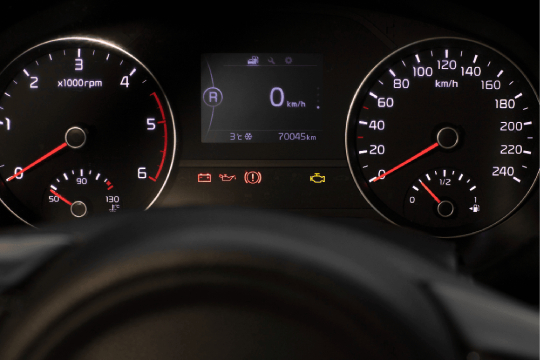
When you’re driving through Brisbane’s busy streets or along the Gateway Motorway, the last thing you want to see is a warning light glowing on your dashboard. Among the most worrying ones for any driver are the ABS (Anti-lock Braking System)
and Brake System Warning lights.
These lights are your vehicle’s way of saying “something’s wrong with your braking system”, and ignoring them could put your safety — and others on the road — at risk.
At Tiny’s Mechanical Services, we specialise in diagnosing and repairing brake systems for Brisbane drivers. In this blog, we’ll explain what these dashboard warning lights mean, why they appear, and what to do when you see them.
Understanding the Brake Warning Light
The brake warning light is typically red and shaped like an exclamation mark inside a circle, often surrounded by parentheses — ( ! ).
What it means:
This light can appear for several reasons:
- Handbrake (parking brake) is still engaged
- Low brake fluid level
- Worn brake pads
- Hydraulic pressure loss
The simplest cause — double-check that your handbrake is fully released.
Over time, brake pads wear down and fluid levels drop. Low brake fluid can affect pressure in the brake system and reduce stopping power.
Some vehicles have sensors that trigger the brake warning light when pads are nearly worn out.
If there’s a leak or issue in the brake lines, this light will appear as a serious safety warning.
What you should do:
If the brake light comes on while driving, pull over safely and check the basics:
- Make sure the handbrake is off.
- Check your brake fluid level if possible.
- If the light stays on, do not continue driving — call a mechanic or have the vehicle towed to Tiny’s Mechanical Services in Brisbane for inspection.
Understanding the ABS Warning Light
The ABS (Anti-lock Braking System) light is usually yellow or amber and features the letters “ABS.”
What it means:
The ABS is designed to prevent your wheels from locking up during hard braking. When this system fails, your regular brakes will still work, but your anti-lock feature will be disabled — meaning you could lose steering control in an emergency stop.
Common reasons the ABS light turns on include:
- Faulty wheel speed sensor
- Damaged ABS wiring or connections
- Low brake fluid or air in the system
- Malfunctioning ABS module
These sensors monitor the rotation of each wheel. If one fails, the system can’t detect when a wheel is about to lock.
Dirt, corrosion, or road debris can damage the sensors and trigger the light.
Just like the main brake system, the ABS relies on proper fluid pressure.
The control unit may fail or lose communication with the sensors.
What you should do:
- If the ABS light appears by itself, your brakes will still function normally, but your anti-lock safety feature won’t.
- Drive cautiously and avoid sudden braking until you can get it checked.
- If both ABS and Brake Warning lights appear together, it’s a serious fault — pull over immediately and contact a mechanic.
Why These Lights Should Never Be Ignored
Ignoring your ABS or brake warning lights can lead to:
- Reduced braking efficiency
- Longer stopping distances
- Loss of steering control in emergencies
- Complete brake failure in severe cases
Brisbane’s stop-start traffic and wet road conditions during summer storms make reliable braking systems essential. What starts as a simple sensor issue can quickly become a major safety hazard.
How Tiny’s Mechanical Services Diagnoses Brake Warning Lights
At Tiny’s Mechanical Services, we use advanced diagnostic tools to quickly find the root cause of brake system warnings. Here’s what our brake inspection typically includes:
- Computer Diagnostic Scan
- Brake Fluid & Pressure Check
- Brake Pad & Rotor Inspection
- Sensor and Wiring Test
- Hydraulic System & ABS Module Check
Our team connects diagnostic equipment to your vehicle’s onboard system to identify specific error codes related to ABS or brake faults.
We inspect your brake fluid condition and pressure levels to detect leaks or air in the system.
Worn-out pads and damaged rotors can trigger the brake light — we check thickness, wear, and surface condition.
We examine each wheel speed sensor and wiring harness for damage, corrosion, or disconnection.
Our mechanics test the ABS pump and control module to ensure they’re communicating properly with the system.
Once diagnosed, we’ll explain the issue clearly and provide a no-obligation quote for any repairs needed.
Prevention: How to Avoid Brake Warning Lights in the Future
You can reduce the chances of seeing those dashboard warnings by:
- Regular brake servicing every 10,000–15,000 km
- Checking brake fluid monthly
- Avoiding harsh braking unless necessary
- Scheduling inspections before long trips or towing
- Choosing quality brake components when replacing parts
Routine maintenance keeps your brake system in top shape and prevents costly repairs later.
When to Visit Tiny’s Mechanical Services
If you notice:
- Persistent ABS or brake lights
- Grinding or squealing noises when braking
- A soft or spongy brake pedal
- Increased stopping distance
— it’s time to have your brakes professionally inspected.
Our Brisbane-based team at Tiny’s Mechanical Services provides expert brake diagnostics, pad and rotor replacements, brake fluid flushes, and ABS repairs for all vehicle makes and models.
Final Thoughts
Your vehicle’s ABS and Brake Warning Lights are not just minor alerts — they’re safety signals. If they appear, take them seriously. By acting quickly and visiting an experienced local workshop like Tiny’s Mechanical Services, you’ll ensure your brakes remain responsive, reliable, and ready for Brisbane’s driving conditions.
Don’t risk your safety — book your brake inspection in Brisbane today!
