
We’ve all been there: you’re driving along Old Cleveland Road, you hit a routine pothole or speed bump, and your car reacts with a violent shudder or a strange metallic clunk. It’s incredibly easy to turn up the radio and try to ignore it, especially when life in Capalaba is busy. Because suspension problems usually sneak up on you gradually, it’s easy to just assume your car is “getting old” or the roads are getting worse.
But your suspension isn’t just about enjoying a smooth ride; it is a critical safety system. It is responsible for keeping your tires firmly glued to the bitumen, absorbing the impact of uneven roads, and ensuring you actually stay in control when cornering or slamming on the brakes. Ignoring early warning signs doesn’t just make your daily commute incredibly uncomfortable – it puts your safety at risk and sets you up for a massive repair bill down the line.
At Tiny’s Mechanical Services, we help drivers across Capalaba keep their vehicles running safely and smoothly. To help you catch trouble before it strands you on the side of the road, here are the telltale warning signs that your suspension is crying out for professional attention.
What Exactly Does Your Suspension Do?
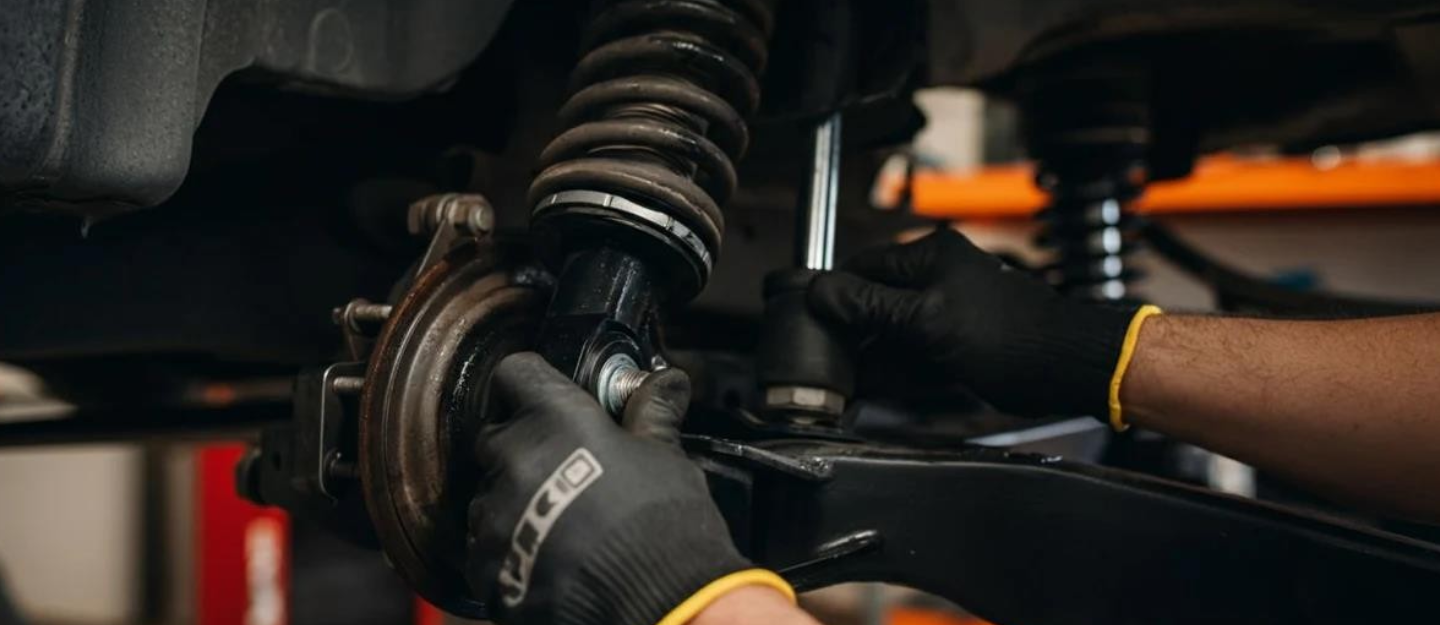
Think of your suspension as a complex, hard-working ecosystem hidden right behind your wheels. It relies on a team of interconnected parts working in absolute harmony:
- Shock absorbers and struts to damp down impact energy.
- Coil springs to support the weight of the vehicle.
- Control arms and bushings to allow structural movement while absorbing road vibrations.
- Ball joints to act as pivots, connecting the steering gear to the wheels.
When one single link in this chain wears out or snaps, it throws the entire vehicle out of balance, putting intense stress on your tires, brakes, and steering alignment.
8 Warning Signs You Need to See a Mechanic ASAP
1. Every Commute Feels Bumpy or Rough
The most obvious indicator of a dying suspension is a sudden lack of ride comfort. If your vehicle suddenly starts driving like an old trampoline – where you feel every tiny pebble, crack, or dip in the road intensely – your shock absorbers or struts are likely shot. When they wear thin, they lose their ability to damp the road impact, forcing the metal frame of your car to take the hit instead.
2. The Car Constantly Drifts or Pulls to One Side
When you’re driving on a flat, straight road, your car should travel straight without you having to fight the steering wheel. If your vehicle is aggressively pulling or drifting toward the left or right, it’s a massive red flag. While this can sometimes be resolved with a quick wheel alignment, it often points to a bent control arm, worn bushings, or uneven suspension sag that is physically dragging the car offline.
3. Your Tires are Wearing Out Unevenly
Take a quick look at your front and rear tires. Are the inside edges wearing down to a bald smooth finish while the outside tread looks completely brand new? This is called “cupping” or uneven tire wear, and it happens when a faulty suspension fails to keep the tire perfectly flat against the road surface. Left unchecked, you’ll end up destroying a premium set of rubber in a fraction of their normal lifespan.
4. The Nose Dives Hard Under Braking
When you apply the brakes firmly, does the front nose of your vehicle dip sharply toward the bitumen? This is a classic sign of worn-out front shocks or struts. When these components lose their structural hydraulic pressure, they can no longer control the massive weight transfer of the vehicle when slowing down. This doesn’t just feel unsettling – it actively increases your stopping distance, which can be the difference between a safe stop and a rear-end accident.
5. The “Three-Bounce” Speed Bump Test
After you roll over a standard speed bump, your vehicle should bounce once, settle immediately, and keep driving smoothly. If your car keeps floating and bouncing up and down several times like a boat on choppy water, your shock absorbers are completely blown. This bouncing actively lifts your tires away from the road, destroying your traction and handling control.
6. Fighting the Steering Wheel
Because your suspension and steering systems are physically joined at the wheel hubs, a problem with one immediately ruins the other. If your steering suddenly feels incredibly stiff, loosely disconnected, laggy, or starts making a loud groaning noise whenever you turn into a parking spot, you need an immediate check-up.
7. Unsettling Clunks, Knocks, or Pops
Cars shouldn’t make noise when you turn corners or drive over bumps. If you start hearing a deep metallic knocking or a sharp popping sound from underneath the wheel arches, you are likely listening to a loose ball joint, a completely split rubber bushing, or a failing strut mount. Ignoring these sounds is incredibly dangerous – a snapped ball joint can cause a wheel to collapse entirely while driving.
8. Your Vehicle Sits Crooked on the Driveway
Walk out to your driveway and look at your car from a distance. Does one corner or side look visibly saggy or lower than the rest? Unless you’ve packed a massive load of bricks into one side of the boot, an uneven ride height almost always points to a broken coil spring or a completely collapsed strut cartridge.
The Domino Effect: Why You Shouldn’t Wait
It’s incredibly tempting to put off mechanical work when money is tight, but suspension issues have a nasty habit of multiplying your expenses.
- A bad shock absorber will quickly ruin a perfect tire.
- A worn bushing will throw out your wheel alignment, ruining your fuel efficiency due to continuous rolling resistance.
- A loose component will place immense, unnatural vibration stress on your steering rack, turning a relatively cheap fix into a massive, multi-thousand-dollar overhaul.
Safe Driving with Tiny’s Mechanical Services
At Tiny’s Mechanical Services in Capalaba, we don’t believe in baffling our clients with confusing mechanical jargon or recommending repairs you don’t actually need. We treat your vehicle exactly like we would treat our own family cars.
Our team uses modern diagnostic equipment to inspect every single element of your steering and suspension layout. We’ll show you exactly what needs addressing immediately to keep you safe on the road, what can wait, and use premium quality parts to ensure your vehicle handles exactly the way the manufacturer intended.
Don’t risk your safety or compromise your driving comfort. If your ride is starting to feel a bit worse for wear, get in touch with the friendly team at Tiny’s Mechanical Services today to book an inspection and drive with absolute confidence.
Frequently Asked Questions (FAQs)
How long do suspension systems last?
Most suspension components can last between 80,000 and 160,000 kilometres, depending on driving conditions and maintenance.
Can I drive with suspension problems?
Minor issues may still allow driving, but it’s not recommended. Suspension faults can reduce control and increase accident risk.
How much does suspension repair cost?
Costs vary depending on the affected components and vehicle type. A professional inspection is the best way to determine repair costs.
What causes suspension damage?
Common causes include:
- Potholes
- Rough roads
- Heavy loads
- General wear and tear
- Accidents or impacts
How often should suspension be checked?
It’s recommended to have your suspension inspected during regular servicing or whenever unusual symptoms appear.
